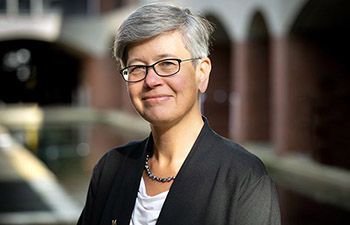
Research Professional has reported that Sussex Vice-Chancellor and President, Professor Sasha Roseneil, has written to MPs and members of the House of Lords, including University alumni, calling for urgent Government action following the announcement of an ‘emergency visa brake’ which, from 26 March 2026, suspends sponsored study visas for applicants from Afghanistan, Cameroon, Myanmar, and Sudan.
The policy has been introduced in response to rising asylum claims and is causing distress among prospective and current students from the affected countries. According to Research Professional News sector analysts are describing the measure as part of a broader government approach to immigration that increasingly treats international students as a lever for managing asylum statistics - a portrayal which is contested by many universities.
In her letter the Vice-Chancellor highlights Sussex's long-standing role in educating students from countries undergoing profound political and social transitions, noting the University's position as the world's leading institution for Development Studies in the QS World University Rankings for nine years running.
Impact on the Chevening Scholarship Programme
The Government’s decision will particularly impact those recently shortlisted for Chevening Scholarships, who have now been told the highly competitive programme is ‘closed indefinitely’. Between 2018 and 2024, 343 Chevening Scholars from the four affected countries studied in the UK. Sussex is particularly favoured by Chevening Scholars, who are attracted to Sussex because of our academic reputation and because our alumni have a strong track-record of returning to their home countries to play a major role in social and economic transformation, taking up of senior roles in government, public service and business.
Equality concerns
Sasha’s letter also raises serious equalities concerns, particularly regarding Afghan women, who have been excluded from secondary and higher education in their home country for over four years. The VC has therefore called on the Government to publish the results of any Equalities Impact Assessment that was undertaken before the decision was made.
She has also asked the Government to engage with the higher education sector on alternative approaches, to consider transitional arrangements for scholarship-funded students, and to ensure the UK remains open to global talent.
This highlights our strategic priority to build Sussex’s reputation locally, nationally, or internationally, demonstrating our distinctive contribution to research, education, or civic engagement.