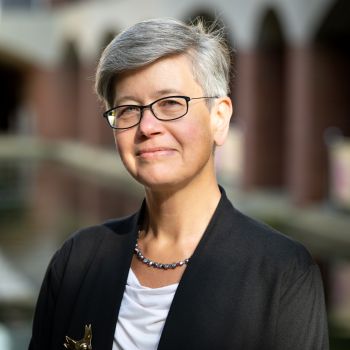
The Vice-Chancellor of the University of Sussex, Professor Sasha Roseneil, has raised serious concerns about the UK Government’s decision to introduce an ‘emergency visa brake’ on study visas for applicants from Afghanistan, Cameroon, Myanmar and Sudan.
In a blog published by the Higher Education Policy Institute (HEPI), Professor Roseneil warns that the policy will have “profound consequences” not only for individuals affected, but also for the UK’s global standing, its soft power, and efforts to advance international development and the Sustainable Development Goals.
The Government has introduced the suspension in response to a sharp rise in asylum claims from the four countries. However, Professor Roseneil highlights that many prospective students have made significant personal and financial sacrifices to study in the UK and contribute positively to university communities and wider society.
The decision has also led to the indefinite closure of the UK’s prestigious Chevening Scholarships scheme for these countries. In the six years to 2024, there were 119 Afghan recipients of these scholarships, 58 from Cameroon, 65 from Myanmar, and 101 from Sudan.
Professor Roseneil also highlights the disproportionate impact on women, especially in Afghanistan, where girls have been excluded from secondary education and women from higher education for more than four years. She raises urgent questions about whether an Equalities Impact Assessment has been undertaken, given the likely sex-equality consequences of the decision.
As the world’s leading institution for Development Studies, ranked first globally in the QS World University Rankings by Subject 2025 for the ninth consecutive year, the University of Sussex attracts students from across the global south and from conflict regions, including the affected countries. Many go on to play important roles in government, public service and economic renewal in their home countries.
Professor Roseneil said: “The UK Government is right to seek to protect the integrity of the immigration system, but it can do this without closing off legitimate educational pathways for students who seek to contribute to the development of their home countries, and who invariably return home with deep respect and fondness for our country.”
She added: “I urge the Government to work with universities to ensure that the UK remains open, outward-looking and committed to attracting global talent in ways that align with national priorities.”
Professor Roseneil argues that restricting access to UK universities for outstanding students from these countries risks undermining a powerful force for peace, democracy and institution-building, while weakening the UK’s influence in regions where constructive engagement is essential.
The University of Sussex stands ready to work constructively with Government to ensure that the UK continues to play a leading role in global education, international development and peace-building.