Peter Bennett
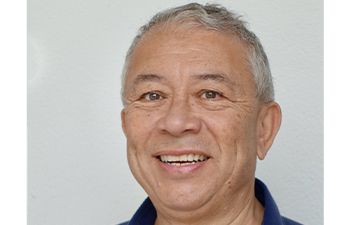
Peter Bennett, who has given generously to create the Bennett Institute for Innovation and Policy Acceleration at Sussex, will be presented with a Gold Medal for Philanthropy at Winter Graduation 2026
Peter Bennett frequently describes himself as “lucky”.
He feels he was fortunate that his love of maths was encouraged by his teachers, enabling him to study economics and politics at Cambridge University, and that he subsequently excelled in the world of banking because he was young and ambitious during the tech revolution of the late 20th century.
“I just feel I was in the right place at the right time,” he says. “I worked with people who appreciated what I could do.”
For the past 15 years Peter has been sharing some of that luck. He is the founder of the Peter Bennett Foundation, a charitable trust set up to promote equity and reduce poverty through direct donations and institutional support.
The University of Sussex is among the beneficiaries, with the launch in 2024 of the Bennett Institute for Innovation and Policy Acceleration.
Based at the University of Sussex Business School’s Science Policy Research Unit (SPRU), the institute is supporting academic research initially in key areas of climate change interventions, energy justice, and AI and sustainability, with plans to expand into other areas, including health, innovation and trade.
In its first year, the work of the institute has contributed directly to the United Nations’ efforts to move toward a more sustainable global economy; to the development of better governance for artificial intelligence; and to shaping global climate policy through senior leadership roles within the Intergovernmental Panel on Climate Change.
It has also received the Financial Times Award for Academic Research with Impact and been honoured as a co-winner of the UK’s national Net-Zero Awards.
“We have appointed some outstanding individuals whose work is already setting a new pace for policy change,” says Peter. “They are collaborating with governments and across the world to develop impactful work.”
His foundation also helps to fund researchers at the Universities of Oxford and Cambridge, as well as numerous small charities and individuals in Asia.
Peter’s philosophy about his generosity is simple: “I don’t think the purpose of life is to be the richest man in the graveyard. The goal isn’t to have more money than anyone else. If I am lucky enough to have more money than I could reasonably spend on myself, my family, my friends, then it’s logical to work out what’s going to happen to the rest.”
Born in Hong Kong of Eurasian heritage (his British father met his Chinese mother during RAF service in World War II), Peter was familiar with the contrasting cultures of his Western friends and the more modest way of life of his Chinese relatives.
His father, who worked for the Hong Kong government after the war, brought Peter and his five siblings to the UK in 1970 when he retired.
Peter’s first experience of helping others came at 15, when he began volunteering for a children’s charity. Talbot House runs playschemes for children with complex needs, and although he initially got involved because his older sister, Val, was already volunteering, he quickly found his own motivation.
“I discovered that I enjoyed being around people who were giving their time to help others. It gives you a completely different sense of meaning and purpose.”
After university, Peter took a job in an American bank and soon found he had a gift for working in commodities, especially after the introduction of computers in the 1980s.
“It was the arrival of the Lotus 1-2-3 spreadsheets that changed everything,” he says. “Before then, all calculations were done manually with a slide rule. You could do everything more quickly in these spreadsheets. A whole lot of new markets developed.”
But while he accumulated wealth, he realised his tastes hadn’t changed. “I never had a desire to have the most expensive car or two or three country cottages.”
Initially he gave his money to big international charities, until he realised that helping smaller charities in Asia meant he could be more involved and see tangible results.
“I could pick a few that I thought were well managed and had a clear goal and vision. I am always driven by the individual. I don’t have an issue with people who want to provide others with something. I just wanted to make sure they weren’t wasting money and weren’t causing damage.”
His relationship with each of the UK universities the foundation supports have also been influenced by individuals whom Peter felt were “good people doing good things, working in institutions that have a good platform for that work”.
His relationship with Sussex began through his sister Val’s husband, Professor Ben Martin, a former director of SPRU who has worked in science policy for more than 40 years.
“I have always been interested in how he and Sussex have looked at that whole area of research. He introduced me to Benjamin Sovacool [Professor of Energy Policy and Director of the Bennett Institute], knowing that he was an individual I could relate to.”
Professor Sovacool is already one of the most highly cited global researchers on controversies in energy and climate policy, whose knowledge and insight has led to him providing analysis and testimony to the UK’s House of Commons and House of Lords, and the US House of Representatives, Senate and Supreme Court.
“One thing I like about academics is that they are not driven by money,” adds Peter. “A lot of people in government are driven by power, and in business are driven by money. You can’t normally buy academics. They want to understand the truth and why things are the way they are. They want to do things that make the world a safer, better place for their children and grandchildren. That’s why it is easier for me to support academics in institutions.”