
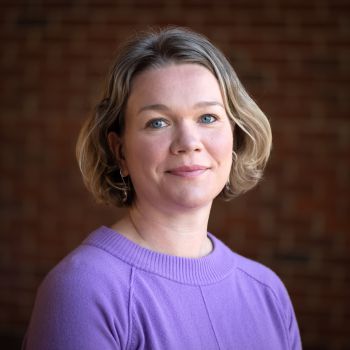
Susanne Bell
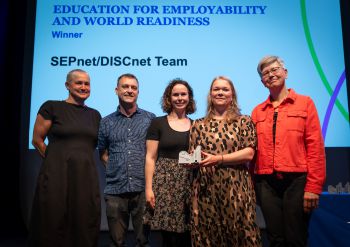
Professor Jacob Dunningham, Associate Professor Kate Shaw, and Susanne Bell collect their Sussex Award from Pro-Vice Chancellor for Education and Students, Professor Kate O'Riordan (left) and Vice-Chancellor Professor Sasha Roseneil (right).
The Sussex Awards ceremony took place in April 2026, celebrating outstanding achievements across the University. In a series of interviews, we’ll hear from the award winners and get a closer look at their work.
This month we speak to Susanne Bell, DISCnet Centre for Doctoral Training Manager. Susanne reflects on the Education for Employability and World Readiness Award win for the South East Physics Network/Data Intensive Science Centre in the South East Physics Network (SEPnet/DISCnet) team.
The team, including Prof Jacob Dunningham, Dr Kate Shaw, Susanne Bell, and Prof Kathy Romer, won their award for running a successful and inclusive industry placement programme that has connected around 100 students per year with paid placements across sectors including finance, energy, and aerospace.
Describe the moment you found out you’d won a Sussex Award
We were absolutely delighted – if a little stunned, as the other nominees were so fantastic! This work has been a long-term, collective effort involving colleagues, partners and – most importantly – our doctoral researchers, so the award felt like recognition of both the programme and the community behind it.
What advice would you give to those who would like to run a successful initiative?
Definitely start by talking to people. We found out from students which sectors, industries or organisations they’re interested in, and then got partners involved to showcase the students’ fantastic skills.
Flexibility is also key, as was capturing feedback and sharing stories – hearing directly from our students helped promote the programme to others and demonstrated to companies the real value of engaging with doctoral researchers.
What was the most challenging obstacle you overcame while working toward this achievement?
One of the biggest challenges was creating a model that is both financially sustainable and genuinely inclusive.
Placement opportunities can unintentionally favour those with fewer financial or caring responsibilities, so we’ve taken steps to reduce those barriers – for example through targeted support for students, conversations with employers about flexibility, and, in some cases, financial support for placements. At the same time, we’ve needed to build and maintain strong relationships with companies – encouraging them to invest time and resources, while demonstrating the long-term value of engaging with doctoral researchers.
Describe the impact of the project
It’s been immediate and long-term.
For doctoral researchers, the programme provides real-world experience, expanded professional networks, and greater confidence in navigating diverse career pathways. We regularly see strong outcomes, including participants moving into permanent roles with the organisations where they completed placements.
For partners, it creates meaningful opportunities to draw on the skills, knowledge and fresh perspectives that doctoral researchers bring to real-world projects.
If you had to describe your project in three words, what would they be?
Transformative; connected; rewarding.
Describe your perfect day out in the local area
My perfect day locally would start with a walk on the South Downs – heading somewhere high to look out across the sea to the south and back inland over the countryside. On the way down, I’d try to spot as many different butterfly species as possible, before finishing with lunch at a good pub. That would be pretty perfect!