
A new study out today (17 June 2026) by researchers from the University of Sussex and the University of Exeter, supported by the British Hedgehog Preservation Society (BHPS), has found microplastics in over three-quarters of pet food products tested.
The discovery has revealed a hidden source of plastic pollution that could be affecting pets, including cats and dogs, and wild animals such as hedgehogs.
The research, published in Environmental Toxicology and Chemistry, analysed 38 different dog, cat, and hedgehog food products sold in the UK. Microplastics were detected in 84% of brands and 27% of all samples tested, with cheaper “value range” products containing more than more expensive products.
“We found microplastics in 16 out of the 19 brands we tested, including very well-known ones,” said the lead researcher, PhD student Emily Thrift. “Given the huge number of pets in the UK, as well as hedgehogs and other wild mammals which are fed these foods to supplement their diets, this represents a major, previously overlooked pathway for plastic to enter terrestrial ecosystems.”
Despite higher concentrations in dry food, wet food leads to higher daily microplastic intake because larger portions are needed to meet energy requirements. The researchers estimate that a large dog could ingest between 162 and 2,314 microplastic particles per day, depending on the food type and brand selected, which would later be excreted, potentially contaminating soil.
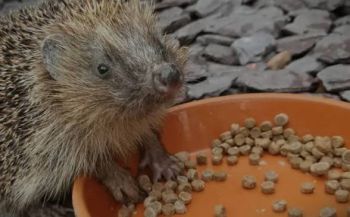
Many wild animals are also fed pet foods in gardens, and hedgehogs could consume between 6 and 105 microplastics per day. This may also have potential implications for pet and wildlife health, although this was not the focus of this research.
Fay Vass, Chief Executive for BHPS, said: “It’s of great concern that this study has shown hedgehogs in Britain appear to be consuming high levels of plastic – although we are not yet sure of the impacts of this on hedgehog health, we do know that toxins can accumulate on microplastic particles.
"Microplastics are an increasing presence across the natural environment as well as the wider food chain, which is a broader issue of growing concern that must be addressed. Exposure to microplastics should be reduced wherever possible to help minimise this unnecessary risk.”
“Microplastics are not just a marine problem,” said Professor Fiona Mathews, Professor of Environmental Biology at the University of Sussex and overseer of the research. “Our pets may be inadvertently spreading plastic pollution through their food and faeces, affecting wildlife and the wider environment.”
At present, the sources of contamination are unclear, and further research is now needed to find out whether ingredient quality, packaging types, or processing methods, are the main contributors to the problem.
Professor Tamara Galloway, Professor of Ecotoxicology at the University of Exeter, said, “Our results are a reminder that our pets are exposed to the same chemical pollutants as ourselves. Cleaning up the food chain is a crucial target for the future.”